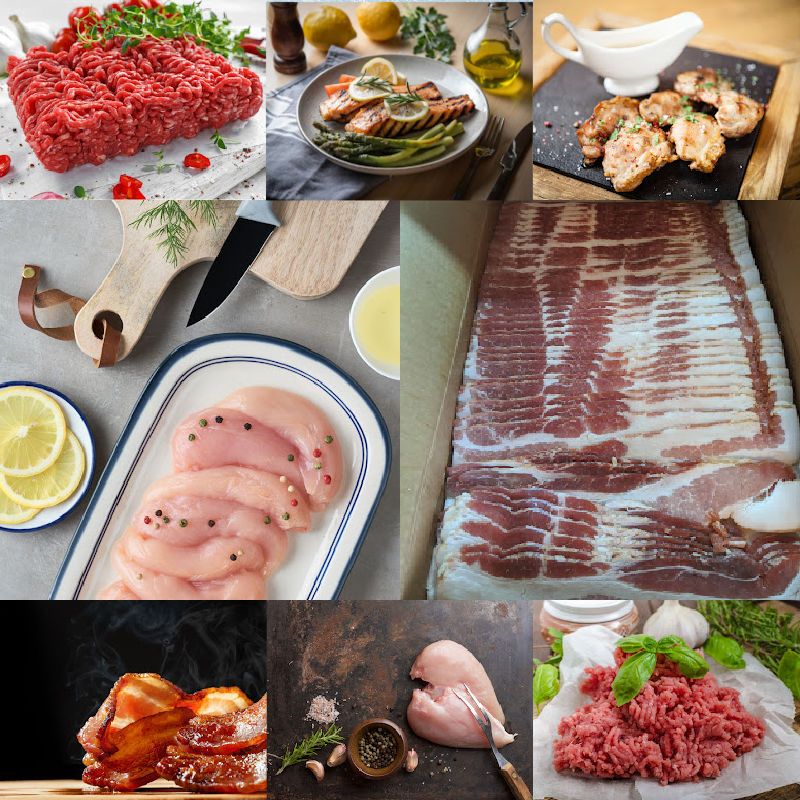



Learn the difference between air chilled vs water chilled chicken, including taste, texture, retained water, safety, cooking, and what to look for when buying chicken.
Air chilled vs water chilled chicken is a question more shoppers are asking as air-chilled chicken becomes easier to find in grocery stores, butcher shops, and online meat markets. But what does “air chilled” actually mean, and how is it different from the traditional water-chilling process?
The difference comes down to how the chicken is cooled after processing. Water-chilled chicken is cooled by immersion in cold water or an ice-water mixture, while chicken air chilled is cooled primarily with cold air. The chilling method can affect how much water the chicken retains, how it cooks, its texture, and how much liquid you may see in the package.
If you have ever opened a package of chicken and wondered why there is a lot of liquid in the bottom—or why some chicken seems to brown more easily than other chicken—the chilling process may be part of the explanation.
Let's take a closer look at air chilled vs water chilled chicken, how each process works, and what it means for you as a consumer.
What Is Air-Chilled Chicken?
Air-chilled chicken is poultry that is cooled using cold air rather than being submerged in a cold-water immersion tank.
After the chicken is processed, the carcasses are moved through a refrigerated environment where cold air circulates around them to bring the chicken down to a safe temperature.
In other words, airchilled chicken is cooled without relying on immersion in a water-filled chilling tank.
The process takes longer and can require more space and energy than water chilling, but one of the biggest differences is what happens to the moisture in the chicken during chilling.
Because the chicken isn't sitting in a tank of cold water, there is considerably less opportunity for it to absorb water during the chilling process.
Does air-chilled mean the chicken never touches water?
Not necessarily.
This is an important distinction that is sometimes lost in marketing.
“Air chilled” describes the primary chilling method. It does not necessarily mean the chicken has had absolutely no contact with water at any point during processing. Processing facilities may use water for other food-safety or sanitation purposes.
The important difference is that the chicken is cooled primarily through cold air rather than immersion in a water-chilling tank.
What Is Water-Chilled Chicken?
Water chilling is the more traditional method used in much of the U.S. poultry industry.
With water chilling, processed chicken carcasses are submerged in tanks containing cold water or an ice-and-water mixture. The cold water rapidly pulls heat from the chicken and brings the carcass temperature down.
Water immersion chilling is widely used because it is an efficient way to cool large quantities of poultry.
However, chicken can absorb some water during this process.
According to the USDA Food Safety and Inspection Service (FSIS), it is not unusual for raw poultry chilled in a water tank to have 8% to 12% retained water. When water is retained because of post-processing chilling, that amount must be declared on the label.
That doesn't mean water-chilled chicken is “fake” chicken or that it has been injected with water. Rather, some water can be absorbed during the chilling process itself.
Air Chilled vs Water Chilled Chicken: The Biggest Differences
Here is a simple way to compare the two:
| Air-Chilled Chicken | Water-Chilled Chicken | |
|---|---|---|
| Chilling method | Cold air | Cold water or ice water |
| Water absorption during chilling | Minimal compared with immersion chilling | Some water may be absorbed |
| Retained water | Generally very low | Can be declared on the label |
| Liquid in package | Typically less | Can be more noticeable |
| Cooking | Often browns easily | Extra surface moisture may affect browning |
| Flavor | Chicken flavor may taste more concentrated | Some consumers perceive a milder flavor |
| Texture | Often firm and less watery | Can be softer depending on the product |
| Processing time | Generally longer | Generally faster |
| Food safety | Can be safe when properly processed | Can be safe when properly processed |
The important thing to remember is that chilling method is only one factor that determines chicken quality. Breed, feed, handling, freshness, packaging, processing, storage, and cooking all matter too.
Why Does Water-Chilled Chicken Have Water in the Package?
One of the most common questions people ask is why there is liquid inside a package of chicken.
That pinkish liquid isn't blood.
The USDA explains that the liquid found in packaged fresh chicken is primarily water that was absorbed during chilling. Most of the blood is removed during slaughter.
Chicken also naturally contains a significant amount of water. For example, USDA data lists whole broiler-fryer chicken at about 66% water before cooking.
So seeing some liquid in a package doesn't automatically mean something is wrong with the chicken.
However, the amount of liquid can vary considerably depending on the product and how it was processed.
This is one reason shoppers interested in chicken air chilled products often notice a difference when opening the package.
Does Air-Chilled Chicken Taste Better?
This is one of the most common questions surrounding air chilled vs water chilled chicken.
The honest answer is: many people prefer the taste and cooking characteristics of air-chilled chicken, but taste is subjective.
Air chilling doesn't add the same amount of water associated with immersion chilling, so the chicken can have a more concentrated natural chicken flavor.
Research has found differences in certain quality characteristics between air- and water-chilled chicken. USDA research, for example, found that air chilling produced better quality breast fillets and higher cooked-meat yields in the study it reported.
However, another controlled study found that trained sensory panelists did not detect significant differences in flavor or texture between air- and water-chilled chicken under the conditions tested.
So it would be too strong to say that everyone will automatically think air-chilled chicken tastes better.
A better way to put it is:
Air chilling can help preserve the natural characteristics of the chicken by minimizing water absorption during the chilling process. Whether you prefer the taste is ultimately a matter of personal preference.
Does Air-Chilled Chicken Have Less Water?
Generally, yes.
This is one of the clearest differences between the two methods.
Water-chilled chicken can absorb water during immersion chilling. USDA explains that retained water from post-evisceration processing must be accounted for and appropriately labeled.
Air chilling avoids the immersion step, so the chicken doesn't absorb water from a chilling tank in the same way.
That doesn't mean air-chilled chicken contains no water. Chicken naturally contains water, and all fresh chicken will have naturally occurring moisture.
The difference is between naturally occurring moisture and water retained from processing.

Does Air-Chilled Chicken Cook Differently?
It can.
One of the most noticeable differences for home cooks may be how easily the chicken browns.
When chicken has excess surface moisture, some of the heat from a skillet or grill has to evaporate that moisture before the surface can brown effectively.
Air-chilled chicken generally has less processing-related surface water, which can make it easier to achieve browning when roasting, grilling, sautéing, or pan-searing.
This can be especially helpful when you're trying to get:
- A golden-brown chicken breast
- Crispy chicken skin
- Better browning in a skillet
- A good sear on chicken thighs
- Roasted chicken with crisp edges
It doesn't mean water-chilled chicken can't brown. It simply means you may need to pat the chicken dry thoroughly before cooking.
Is Air-Chilled Chicken More Tender?
Not necessarily.
Tenderness is affected by many factors, including the age and breed of the bird, muscle characteristics, processing, storage, and cooking.
USDA research has found quality differences associated with chilling methods, including better quality breast fillets in one study.
However, it would be inaccurate to promise that every air-chilled chicken product will automatically be more tender than every water-chilled product.
Air chilling is a processing method, not a guarantee of tenderness.
Is Air-Chilled Chicken Healthier?
This is another question that deserves a careful answer.
Air-chilled does not automatically mean healthier.
Air chilling primarily describes how the chicken is cooled during processing. It does not automatically mean the chicken is:
- Organic
- Antibiotic-free
- Free-range
- Pasture-raised
- Hormone-free
- More nutritious
- Lower in calories
- Higher in protein
Those characteristics depend on other aspects of how the chicken was raised and processed.
The benefit of air chilling is more closely related to processing, retained water, cooking characteristics, and product quality than to a simple “healthy versus unhealthy” distinction.
Is Air-Chilled Chicken Safer?
Both air-chilled and water-chilled chicken can be safely produced.
The purpose of chilling is to rapidly reduce the temperature of poultry and limit bacterial growth.
USDA research comparing the two methods found that both air and immersion chilling met criteria for controlling bacterial pathogens.
A later study also found differences in microbial ecology and shelf-life between the two methods, but the researchers emphasized that additional industrial-scale research would be useful.
So air chilled doesn't mean “safe” while water chilled means “unsafe.”
Proper processing, refrigeration, handling, and cooking are critical regardless of the chilling method.
At home, raw chicken should be refrigerated at 40°F or below, according to USDA guidance.
Does Air-Chilled Chicken Have Fewer Chemicals?
This question requires some clarification.
Air chilling itself doesn't require a water immersion chilling tank, but that doesn't mean every air-chilled chicken is processed without any antimicrobial or other food-safety interventions.
Water-chilling systems can use approved antimicrobial substances in the chiller water. USDA's list of approved ingredients includes peroxyacetic acid (PAA) for certain poultry processing applications.
Likewise, “air chilled” should not automatically be interpreted as “chemical-free.”
If you're concerned about how a particular chicken is processed, look at the actual package label and the producer's processing information rather than assuming everything from the words “air chilled.”
Does Air-Chilled Chicken Have More Protein?
Not necessarily.
Air chilling does not magically increase the amount of protein in chicken.
However, because water-chilled chicken can contain retained water, comparing products on a weight-for-weight basis can sometimes be complicated.
The nutrition label and ingredient statement are the best way to compare specific products.
Remember that naturally occurring water is already part of chicken. USDA lists raw chicken as containing a substantial amount of naturally occurring moisture.
Why Does Air-Chilled Chicken Cost More?
You may notice that air-chilled chicken is sometimes more expensive than conventional water-chilled chicken.
There are several potential reasons.
Air-chilling systems can require:
- More refrigeration space
- Longer chilling times
- Additional energy
- Different equipment
- Different processing systems
Water chilling is highly efficient for large-scale poultry processing, which helps explain why it remains widely used.
Air chilling can also result in less retained water. Since water adds weight to water-chilled poultry, comparing prices based simply on package weight can sometimes be misleading.
For shoppers, the better question isn't simply:
“Which package costs less?”
It is:
“How much usable chicken am I getting, and what qualities matter most to me?”
Is Air-Chilled Chicken Worth the Extra Cost?
That depends on what you value.
If you care about:
- Less processing-related retained water
- Less liquid in the package
- Easier browning
- A firmer cooking texture
- Natural chicken flavor
- Understanding how your chicken was processed
then you may find air chilled chicken worth paying more for.
If your priority is simply getting affordable chicken for soups, casseroles, slow-cooker meals, or other recipes where browning isn't important, conventional water-chilled chicken may work perfectly well.
There isn't one right answer for every shopper.
How Can You Tell If Chicken Is Air Chilled?
Look at the package.
Many producers specifically identify their chicken as “air chilled,” “air-chilled,” or “air chilled chicken.”
You can also look at the label for a retained-water statement.
USDA requires retained water from post-evisceration processing to be declared on applicable raw single-ingredient meat and poultry products.
For example, you may see wording indicating that the product “may contain up to X% retained water.”
That information can be useful when comparing products.
If you're shopping online, check the product description or ask the supplier directly about its chilling process.
For example, the Food and Meat Co-op offers organic air-chilled chicken breasts, giving shoppers an opportunity to try air-chilled chicken for themselves.
What Does “No Retained Water” Mean?
“No retained water” is a specific labeling claim—not simply another way of saying “air chilled.”
USDA explains that establishments can use a “no retained water” statement when their process doesn't result in retained water, or when they have data demonstrating that it does not add retained water.
There is also a specific USDA standard associated with this claim. USDA states that a product making a “no retained water” claim cannot retain more than 0.49% water such that the amount rounds to zero.
So while air chilling and no-retained-water claims are related concepts, they aren't interchangeable terms.

Is Air-Chilled Chicken the Same as Organic Chicken?
No.
These terms describe two completely different things.
Air chilled describes how the chicken is chilled during processing.
Organic refers to how the animal is raised and how the product is produced under the USDA organic standards.
A chicken can be:
- Air chilled and organic
- Air chilled and not organic
- Water chilled and organic
- Water chilled and not organic
If organic certification matters to you, look for the appropriate organic labeling—not simply the words “air chilled.”
Is Air-Chilled Chicken the Same as Antibiotic-Free Chicken?
No.
Again, these are separate characteristics.
Air chilling describes the cooling process.
Antibiotic-related claims describe the use of antibiotics in raising or producing the chicken and are governed by their own labeling requirements.
If avoiding antibiotics is important to you, look for a specific, properly supported claim on the package or ask the producer about its practices.
Is Air-Chilled Chicken Better for Crispy Chicken?
It can be a good choice.
Crispy chicken depends heavily on controlling moisture.
Whether you're making crispy chicken thighs, roasted chicken, chicken wings, or pan-seared chicken breasts, excess moisture on the surface can make browning and crisping more difficult.
That's one reason many cooks appreciate air-chilled chicken.
However, you can also improve the browning of water-chilled chicken by:
- Removing it from the package.
- Patting it thoroughly dry with paper towels.
- Allowing the surface to dry briefly when appropriate.
- Using a properly preheated pan, oven, grill, or air fryer.
- Avoiding overcrowding the cooking surface.
Is Air-Chilled Chicken Better for Grilling?
It can be.
Grilling is another situation where surface moisture matters.
Drier chicken surfaces generally brown more readily, while excess moisture can slow browning.
That makes air-chilled chicken appealing for people who frequently grill chicken breasts, thighs, wings, or other cuts.
But the quality of the chicken itself, cooking temperature, seasoning, and technique still have a major impact on the final result.
Does Air-Chilled Chicken Last Longer?
Possibly, but don't assume it automatically has a longer refrigerator life.
Research has found some differences in shelf-life and microbial characteristics between air- and water-chilled chicken. One controlled study found air chilling was associated with improved odor and shelf-life under the study conditions.
However, the shelf life of the chicken you purchase depends on many variables, including:
- Processing
- Packaging
- Storage temperature
- Transportation
- Date of packaging
- Date of purchase
- Whether the package has been opened
- How the chicken is handled at home
Always follow the package's use-by or freeze-by instructions and USDA safe-handling recommendations.
Does Air-Chilled Chicken Smell Different?
It can, but smell isn't a reliable way to determine whether chicken was air chilled or water chilled.
Research has found differences in odor during storage between some air- and water-chilled chicken samples.
However, fresh raw chicken should not have a strong unpleasant or rotten odor, regardless of how it was chilled.
If chicken has an unusual odor, slimy texture, damaged packaging, or other signs of spoilage, don't assume the smell is simply because it is air chilled.

Is Water-Chilled Chicken Bad?
No.
This is probably the most important misconception to clear up.
Water-chilled chicken is not automatically bad chicken.
Water immersion chilling is a widely used poultry-processing method, and USDA research has found that both water and air chilling can effectively control bacterial pathogens when properly managed.
The primary consumer difference is that water chilling can result in some water being retained in the chicken.
For some shoppers, that matters because they prefer chicken with minimal processing-related water. Other shoppers may not notice or care.
The choice ultimately comes down to what you value.
Is Air-Chilled Chicken Better Than Water-Chilled Chicken?
There isn't a universal answer, but air-chilled chicken has some advantages that many consumers appreciate.
Air-chilled chicken may be a good choice if you want:
- Less processing-related retained water
- Less liquid in the package
- A firmer texture
- Easier browning
- A concentrated chicken flavor
- More transparency about how the chicken was processed
Water-chilled chicken may make sense if you prioritize:
- Lower price
- Wide availability
- Large-volume purchasing
- Traditional poultry products
- Recipes where the difference in browning or moisture isn't important
Rather than thinking of one method as “good” and the other as “bad,” think of them as two different approaches to chilling chicken.
How Much Water Is Naturally in Chicken?
It's important to understand this distinction when discussing air chilled vs water chilled chicken.
Chicken naturally contains water.
According to USDA data, whole broiler-fryer chicken is approximately 66% water before cooking. White meat chicken with skin is listed at about 69% water.
That doesn't mean the chicken has been soaked in water.
Naturally occurring moisture is part of the chicken itself.
The issue consumers often notice with water-chilled chicken is additional water absorbed during processing.
That's why “water content” and “retained water” aren't the same thing.
What Should You Look for When Buying Chicken?
If you're trying to choose high-quality chicken, don't focus on just one label claim.
Consider the entire picture.
Look at the chilling method
Do you prefer air chilled or water chilled?
Check for retained water
If a product has retained water, the label should disclose it when required.
Look at the ingredient statement
For a simple chicken product, you may want to see chicken as the primary or only ingredient, depending on what you're buying.
Consider how the chicken was raised
Look for information about:
- Antibiotic use
- Animal raising practices
- Feed
- Cage-free/free-range claims where applicable
- Organic certification if important to you
- Country of origin
Consider the processor
Knowing who produces your chicken can provide much more information than a single phrase on the package.
What Is the Best Chicken to Buy?
The best chicken is ultimately the chicken that fits your priorities and your budget.
If you're comparing two otherwise similar products, understanding air chilled vs water chilled chicken can help you make a more informed decision.
Air chilling can reduce the amount of processing-related water retained by the chicken and may provide cooking characteristics that some people prefer.
But don't let the term “air chilled” make you assume everything else about the chicken is automatically better.
Ask questions.
Where was the chicken raised?
How was it processed?
Does it contain retained water?
How is it packaged?
How fresh is it?
What claims are actually supported by the label?
Those questions will give you a much clearer picture of what you're buying.
What Does “Chicken Air Chilled” Mean?
If you see the phrase chicken air chilled while shopping, it simply means the chicken was chilled primarily using cold air rather than being immersed in a water-chilling system.
You may also see it written as:
- Air-chilled chicken
- Air chilled chicken
- Airchilled chicken
- Chicken air chilled
- Dry-air chilled chicken
These terms generally point consumers toward the same basic processing concept, although specific labeling terminology can vary.
What If I'm Searching for “Air Chilled Chicken Near Me”?
If you've searched “air chilled chicken near me,” you're probably looking for a local grocery store, butcher, farm, meat market, or online meat supplier that sells chicken processed using air chilling.
The easiest way to find it is to:
- Search for “air chilled chicken near me.”
- Check the product descriptions of local meat suppliers.
- Look for “air chilled” on the package.
- Check the retained-water statement.
- Ask the butcher or supplier how the chicken is chilled if the information isn't listed.
Because air-chilled chicken isn't yet as universally available as water-chilled chicken in the U.S., you may need to look specifically for suppliers that identify their chilling method.
Looking for Organic Air-Chilled Chicken?
If you're interested in trying air-chilled chicken for yourself, the Food and Meat Co-op offers organic, air-chilled boneless, skinless chicken breasts. The chicken is air chilled, has no added water, no preservatives, no antibiotics ever, and no added hormones. It's also individually quick frozen in convenient 2-pound bags.
Shop organic air chilled chicken breasts from the Food and Meat Co-op.
The Bottom Line: Air Chilled vs Water Chilled Chicken
When it comes to air chilled vs water chilled chicken, the biggest difference is simple:
Air-chilled chicken is cooled primarily with cold air, while water-chilled chicken is cooled by immersion in cold water or an ice-water mixture.
Water chilling is an established and widely used poultry-processing method. It can result in some water being retained by the chicken, which is why USDA requires applicable retained-water amounts to be disclosed on the label.
Air chilling minimizes that type of water absorption and can provide cooking and texture characteristics that many consumers prefer.
Neither method alone tells you everything about the quality, nutrition, safety, or raising practices of the chicken.
The smartest approach is to understand how your chicken was processed, what is on the label, and what matters most to your family.
Once you understand the difference, you'll be able to look at a package of chicken and know what air chilled actually means—and decide whether it's the right choice for you.
Frequently Asked Questions About Air-Chilled Chicken
Is air-chilled chicken healthier?
Not automatically. Air chilling describes the chilling process, not the nutritional profile or raising practices of the chicken.
Does air-chilled chicken have less water?
It generally has less processing-related retained water because it isn't immersed in a water-chilling tank.
Is air-chilled chicken safer?
Both air-chilled and water-chilled chicken can be safely processed. Proper refrigeration, handling, and cooking are important regardless of chilling method.
Does air-chilled chicken taste better?
Many people prefer it, but taste is subjective. Research has found quality differences between chilling methods, while some sensory studies have found no significant difference in flavor.
Is water-chilled chicken bad?
No. Water chilling is a widely used and regulated poultry-chilling method.
Does air-chilled chicken mean organic?
No. Air chilled and organic describe completely different characteristics.
Does air-chilled chicken mean antibiotic-free?
No. Antibiotic claims and chilling methods are separate.
Why is there pink liquid in my chicken package?
It is primarily water and chicken juices, not blood. USDA explains that water can be absorbed during the chilling process.
Can I use air-chilled chicken in any recipe?
Yes. Air-chilled chicken can be used in the same types of recipes as other chicken. Its lower surface moisture can be particularly helpful for browning and crisping.
How do I find air-chilled chicken near me?
Search for local meat suppliers, butcher shops, grocery stores, and online meat companies that specifically identify their chicken as air chilled. Always check the product label or ask the supplier if the chilling method isn't clear.

Everything You need to Know About Chicken Breasts

Bulk Chicken Buying Guide: Everything You Need to Know

Answers to Your Most Fequently Asked Meat Questions
 How Much Freezer Space Do You Need Per Pound of Meat?