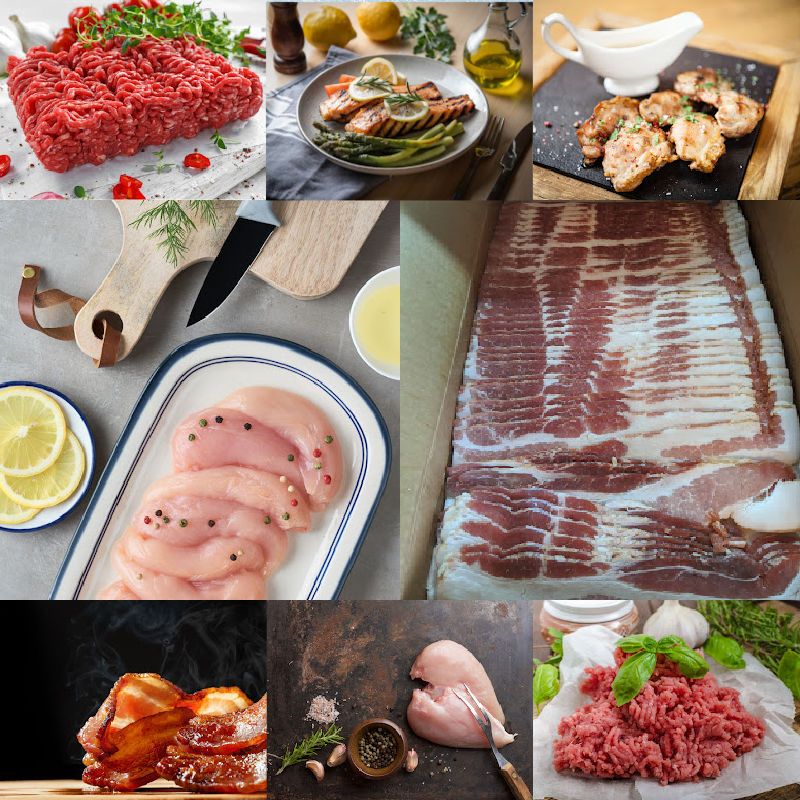



How long can frozen meat stay in the freezer? Learn freezer storage times for beef, pork, chicken and bacon, plus tips for preventing freezer burn and preserving quality.
How long can frozen meat stay in the freezer? If you've ever found a package of steaks hiding at the bottom of your freezer, wondered how old that ground beef really is, or discovered a forgotten package of bacon behind the frozen vegetables, you're not alone.
The good news is that frozen meat can last much longer than many people realize. When meat is continuously stored at 0°F (-18°C) or below, freezing keeps it safe indefinitely. However, that doesn't mean the meat will maintain its best flavor, texture, tenderness, and juiciness forever. The USDA and FDA recommend freezer storage times primarily for quality, not safety.
That distinction is especially important for families who buy meat in bulk. Filling your freezer with beef, pork, chicken and bacon can save money and trips to the grocery store—but only if you know how to store it properly and use it before quality begins to decline.
This guide answers the most common questions about frozen meat, including How long can meat stay frozen?, how long beef can stay frozen, how long bacon can stay in the freezer, how long pork lasts in the freezer, how freezer burn affects meat, and how to tell whether older frozen meat is still worth using.
The Short Answer: How Long Can Frozen Meat Stay in the Freezer?
If your freezer stays at 0°F or below, properly handled meat can remain safe indefinitely. The recommended time limits are generally about maintaining the best quality.
Here's a quick reference:
| Type of Meat | Best Quality When Frozen |
|---|---|
| Beef steaks, chops & roasts | 4–12 months |
| Ground beef | 3–4 months |
| Pork steaks & chops | 4–6 months |
| Pork roasts | 4–12 months |
| Bacon | About 1 month |
| Raw sausage | 1–2 months |
| Cooked meat | 2–3 months |
| Chicken, whole | Up to 1 year |
| Chicken pieces | Up to 9 months |
| Ground meats | 3–4 months |
These are quality guidelines for food stored continuously at 0°F (-18°C) or below. Frozen meat doesn't automatically become unsafe simply because it has been in the freezer longer than the recommended quality window.
How Long Can Meat Stay Frozen?
So, how long can meat stay frozen?
The answer depends on what you mean by "stay."
From a food-safety standpoint: indefinitely
Meat that has been properly handled and continuously maintained at 0°F or below can remain safe indefinitely. Freezing stops microorganisms from multiplying, although it does not necessarily kill them.
From a quality standpoint: usually a few months to a year
Over time, frozen meat can gradually lose quality. You may notice:
- Drier texture
- Less juiciness
- Changes in color
- Loss of flavor
- Tougher texture
- Freezer burn
- Off or rancid odors in meat that has been stored too long
That's why the USDA's recommended freezer-storage periods are intended primarily to help you enjoy your meat at its best—not because the meat suddenly becomes dangerous on a particular date.
This is an important distinction for anyone stocking a freezer. If you find a package of beef that has been frozen for 14 months, for example, you don't automatically need to throw it away. If it remained properly frozen the entire time, the main question is whether the quality is still acceptable.

How Long Can Beef Stay Frozen?
Beef is one of the easiest meats to stock in a freezer because many cuts maintain good quality for months.
According to the USDA, uncooked beef steaks, roasts and chops are best used within about 4 to 12 months, while ground beef is best used within about 3 to 4 months. Cooked beef is generally best within 2 to 3 months.
Beef steaks and roasts
For steaks and roasts, the general quality range is:
4–12 months at 0°F or below
A well-packaged steak with little exposure to air may still look and taste quite good toward the longer end of that range.
Ground beef
Ground beef has a shorter recommended quality window:
3–4 months
Because ground meat has considerably more surface area exposed to air, it can experience quality deterioration more quickly than an intact steak or roast.
If you buy ground beef in bulk, consider dividing it into meal-sized portions before freezing. Flattening packages into relatively thin, uniform portions can also make them easier to stack, freeze and thaw.

How Long Does Pork Last in Freezer?
If you've been wondering how long does pork last in freezer, the answer depends on the cut.
For best quality, USDA guidance generally recommends:
- Pork steaks and chops: 4–6 months
- Pork roasts: 4–12 months
- Ground pork: 3–4 months
- Cooked pork: about 2–3 months
Pork that has been frozen longer than these periods isn't necessarily unsafe if it has remained continuously frozen at 0°F or below. However, the longer it stays frozen, the greater the chance that you'll notice changes in texture, flavor or juiciness.
What about pork purchased in bulk?
Bulk pork can be an excellent freezer staple. If you purchase a large quantity, don't simply toss the entire package into the freezer and forget about it.
Instead:
- Divide large quantities into family-sized portions.
- Keep packages tightly sealed.
- Remove as much air as practical.
- Label each package with the cut and date.
- Organize your freezer so older packages are easiest to reach.
This makes it much easier to follow a first-in, first-out system—use the oldest packages first and put newer purchases toward the back.

How Long Can Bacon Stay in the Freezer?
Bacon is one of the meats that has a considerably shorter recommended freezer-storage period.
So, how long can bacon stay in the freezer?
USDA guidance recommends about 1 month for best quality. Some USDA materials give a broader 1–2 month range for bacon and sausage, but the FoodSafety.gov cold-storage chart specifically lists bacon at about 1 month.
That doesn't mean bacon becomes unsafe on day 31.
If bacon has been kept continuously frozen at 0°F or below, it can remain safe indefinitely. However, bacon's fat content makes proper packaging especially important because prolonged freezer storage can lead to changes in flavor and the development of rancid or stale odors.
Freezing bacon in portions
If you buy bacon in bulk, consider dividing it into portions before freezing.
For example, if your family typically uses one package at a time, freeze individual packages or meal-sized portions rather than repeatedly opening one large package.
This reduces the amount of air exposure and makes it much easier to grab exactly what you need.

What About Ground Meat?
Ground meat generally doesn't maintain peak quality as long as larger cuts.
USDA guidance recommends approximately 3–4 months for ground beef and other ground meats when frozen at 0°F.
Why the shorter window?
Grinding increases the amount of surface area exposed to air. That can accelerate quality changes compared with an intact roast or steak.
For families buying bulk ground beef, portioning is especially useful. Freeze the amount you typically use for tacos, burgers, meatloaf, spaghetti sauce or other meals.

How Long Can Chicken Stay Frozen?
Chicken is another popular freezer staple, especially for families who buy meat in bulk. When properly packaged and stored at 0°F (-18°C) or below, frozen chicken can maintain good quality for several months.
For the best quality, general USDA freezer-storage guidelines recommend:
- Whole chicken: Up to 1 year
- Chicken pieces: Up to 9 months
- Cooked chicken: About 4 months
These timeframes are quality recommendations, not expiration dates. If chicken has remained continuously frozen at 0°F or below, it can remain safe indefinitely. However, the longer it stays frozen, the more likely you are to notice changes in texture, flavor, moisture, or appearance.
Chicken can also be particularly susceptible to freezer burn, especially when the packaging allows air to reach the meat. To help preserve its quality, keep chicken tightly sealed in freezer-safe packaging and remove as much excess air as possible.
If you're stocking up on chicken in bulk, portion it into meal-sized packages before freezing. That way, you can thaw only what you need instead of repeatedly opening and exposing a larger package to air.
Tip: Label each package with the type of chicken and the date it was frozen. This makes it much easier to rotate your freezer and use older packages first.
Does Freezer Burn Mean Meat Is Bad?
No.
This is one of the biggest misconceptions about frozen meat.
Freezer burn does not mean the meat is unsafe. It is primarily a quality problem caused by moisture loss from the surface of frozen food. Meat may develop grayish-brown, leathery or dry-looking areas.
Freezer burn can affect the taste and texture, but it doesn't automatically mean you need to throw the meat away.
If only a small area is affected, you can often trim away the freezer-burned portion before or after cooking.
What causes freezer burn?
Freezer burn happens when moisture escapes from the food and air reaches its surface.
It's more likely when:
- Packaging isn't airtight
- There is excess air inside the package
- Food is stored for a long time
- Packages are poorly sealed
- Meat is repeatedly exposed to temperature fluctuations
Proper packaging can significantly reduce the problem.
What's the Best Way to Package Meat for the Freezer?
If you want meat to stay in good condition for months, how you freeze it matters almost as much as how long you freeze it.
The goal is to minimize exposure to air and moisture loss.
1. Use freezer-safe packaging
Use packaging specifically designed for freezer storage. Freezer bags, vacuum-sealed packages and other airtight freezer packaging can help protect meat from air exposure.
2. Remove excess air
If you're using freezer bags, press out as much excess air as practical before sealing.
Air is one of the biggest enemies of long-term freezer quality.
3. Divide large quantities
Don't freeze 20 or 30 pounds of meat together unless you plan to thaw and use it all at once.
Divide bulk purchases into portions that make sense for your household.
4. Label everything
Write the:
- Type of meat
- Cut
- Quantity
- Date frozen
on each package.
A package labeled "beef" isn't nearly as useful six months later as one labeled "2 ribeye steaks — frozen 8/17/26."
5. Keep your freezer cold
Your freezer should maintain 0°F (-18°C) or below for long-term storage. An inexpensive appliance thermometer can help you verify the actual temperature rather than relying solely on the freezer's dial or display.
Does Freezing Meat Destroy Nutrients?
Generally, no.
Freezing itself doesn't significantly reduce the nutrient value of meat. USDA guidance notes that there is little change in the protein value of meat and poultry during freezer storage.
The bigger concern over long periods is quality: texture, flavor, juiciness and appearance.
Can You Eat Meat That Has Been Frozen for Years?
Potentially, yes—provided it was properly handled and remained continuously frozen at 0°F or below.
This is where the difference between safety and quality becomes important.
A package of beef that has been frozen for two years isn't automatically unsafe simply because it is two years old. However, it may not have the same quality as beef frozen for six months.
Before using very old frozen meat, inspect the packaging and meat after thawing. Pay attention to unusual odors, extensive deterioration or other signs that something went wrong with storage.
USDA advises that if frozen food develops an off odor after prolonged storage, it should be discarded.
When in doubt, don't taste questionable meat to determine whether it is safe.

What If the Meat Has Been Thawed and Refrozen?
This situation is different from meat that has simply remained frozen.
If meat has completely thawed, its safety depends on how long it spent at temperatures where bacteria could multiply.
Meat should not be thawed on the kitchen counter or left at room temperature. Safe thawing methods include:
- In the refrigerator
- In cold water
- In the microwave
Food thawed in cold water or in the microwave should be cooked immediately.
If meat has thawed in the refrigerator and remained safely refrigerated, it may be possible to refreeze it, although you may notice some loss of quality.
How Should You Thaw Frozen Meat?
The refrigerator is generally the easiest method for safely thawing meat, especially large cuts.
Place the frozen package in a container or on a tray to prevent juices from contaminating other foods, and allow enough time for it to thaw.
For faster thawing, you can use cold water, changing the water as needed to keep it cold.
Microwave thawing is another option, but meat thawed in the microwave should be cooked immediately.
Never thaw meat on the kitchen counter.
The outside of the meat can enter the temperature range where bacteria multiply while the inside remains frozen.
What Happens If Your Freezer Loses Power?
A power outage doesn't automatically mean you need to throw away everything in your freezer.
Keep the freezer door closed as much as possible. According to USDA guidance, a full freezer can generally maintain a safe temperature for about 48 hours, while a half-full freezer can generally maintain it for about 24 hours, provided the door remains closed.
Once power returns, check the condition of the food. If food still contains ice crystals or is 40°F or below, it may generally be safely refrozen or cooked, although quality can suffer.
When you're unsure about whether food remained at a safe temperature, it's better to err on the side of caution.
A Simple Freezer Organization System for Bulk Meat
If you regularly buy meat in bulk, organization can make a huge difference.
Try this simple system:
Keep newer meat in the back and older meat in front.
Organize by category:
- Beef
- Pork
- Chicken
- Ground meat
- Bacon
- Sausage
- Prepared or cooked meats
Label everything with the date.
Every few months, take a quick inventory of what's in your freezer. You may be surprised by how much meat you've accumulated—and how much you forgot you had.
A freezer inventory can also prevent unnecessary grocery purchases.
The Bottom Line: How Long Can Frozen Meat Stay in the Freezer?
So, how long can frozen meat stay in the freezer?
If it has been handled properly and continuously stored at 0°F or below, frozen meat can remain safe indefinitely. The recommended storage periods are mainly about maintaining the best possible quality.
For the best eating experience, remember these general guidelines:
- Beef steaks and roasts: 4–12 months
- Ground beef: 3–4 months
- Pork chops and steaks: 4–6 months
- Pork roasts: 4–12 months
- Bacon: about 1 month
- Raw sausage: 1–2 months
- Cooked meat: 2–3 months
- Whole chicken: up to 12 months
- Chicken pieces: up to 9 months
These aren't expiration dates. They're quality guidelines.
That means you don't necessarily need to panic when you discover an older package of meat at the bottom of your freezer. Instead, consider how it was packaged, whether it remained continuously frozen, how long it has been stored and what condition it is in now.
For families who buy meat in bulk, the freezer can be one of the best tools for saving money and keeping a well-stocked kitchen. The key is knowing how to package your meat, maintain the right temperature, label your packages and rotate your inventory.
When you know how long meat can stay frozen and how to store it properly, buying meat in bulk becomes much easier to manage—and you can enjoy your freezer stash with confidence.
Frequently Asked Questions About Frozen Meat
How long can meat stay frozen?
Meat stored continuously at 0°F (-18°C) or below can remain safe indefinitely. However, recommended freezer-storage times are designed to preserve the best quality. Beef steaks and roasts generally maintain good quality for 4–12 months, while ground meat is best within about 3–4 months.
How long can beef stay frozen?
Uncooked beef steaks, roasts and chops are generally best within 4–12 months when stored at 0°F or below. Ground beef is best within about 3–4 months, while cooked beef is generally best within 2–3 months.
How long can bacon stay in the freezer?
For best quality, bacon is generally recommended for about 1 month in the freezer. Bacon that has remained continuously frozen at 0°F or below can remain safe longer, but quality may decline over time.
How long does pork last in freezer?
Pork chops and steaks are generally best within 4–6 months, while pork roasts can maintain good quality for 4–12 months. Ground pork is generally best within 3–4 months.
Is meat still safe if it has freezer burn?
Usually, yes. Freezer burn is a quality issue, not a food-safety issue. It can make portions of meat dry, tough or less flavorful. Affected areas can often be trimmed away.
Does frozen meat expire?
Not in the same way refrigerated meat does. Meat that has been properly handled and continuously stored at 0°F or below can remain safe indefinitely. However, its quality can deteriorate over time, which is why USDA freezer-storage recommendations are given.
Can you freeze meat in its original packaging?
You can, but the quality may be better protected by adding freezer-safe wrapping or transferring the meat to airtight freezer packaging, particularly for longer-term storage. The goal is to minimize air exposure and moisture loss.
What temperature should a freezer be?
For long-term frozen-food storage, keep your freezer at 0°F (-18°C) or below. An appliance thermometer is a simple way to verify the temperature.
Does freezing meat make it last forever?
Freezing makes properly stored meat safe for an extremely long time, but it doesn't preserve perfect quality forever. Texture, flavor, juiciness and color can gradually decline during extended storage.
What's the best way to prevent freezer burn?
Use freezer-safe, airtight packaging, remove as much air as possible, and avoid leaving meat loosely wrapped in the freezer. Good packaging helps reduce moisture loss and protects the meat's quality during long-term storage.

How Much Freezer Space Do You Need Per Pound of Meat?

Receiving Frozen Meat in Bulk: How to Safely Defrost, Repackage, and Refreeze Without Losing Quality

Top 10 Picks: The Best Deals on Upright & Chest Freezers

The Benefits of a Full Freezer